Sunday, 8 October 2017

The Role Of Mobile Apps In The Internet Of Things

Technology is the biggest thing to hit the planet earth over the past few decades. Digitization is apparently the name of the game. It’s either you join the bandwagon or get left behind. Many of us have witnessed its birth, growth and its surprising exponential growth that gave us the amazing world of the Internet of Things and the smart technology we can’t live without right now. And one of the fastest growing industries related to their use is mobile apps that have virtually erased the word “boredom” in our vocabulary.
There are mobile apps for just about everything you’ll ever need in real life through the use of your smartphone. Most mobile apps, especially the ones that really have a practical use, have uplifted our lives and made certain tasks easier than they used to. From work-related to social networking and gaming apps, you can download and install free or premium apps that suit your taste and meet your tech demands.

Many industrial companies with extensive terrain or explosive areas today continue to use outdated technologies to plan, execute, manage and control their business processes. Employees are not well integrated in the flow of information and due to a lack of alternatives, certifications or purely out of habit (“we’ve always done it this way”), many tasks are still being performed with clipboard and paper. These archaic methods bring increased risk and inflexibility to the business, being error‐prone and inefficient. This also leads to mobile workers carrying more than they should when walking around the site, creating a potential safety issue and affecting the wellbeing of their workforce.

(Via: https://www.automation.com/automation-news/article/industrial-internet-of-things-why-mobile-applications-are-becoming-increasingly-important-for-the-industry)

The tech shift we are experiencing right now is expected to go on and on until we reach the era of artificial intelligence (which has already started, by the way). The future may be uncertain for now but one thing is for sure, investing in a mobile app venture can likely bring in big profits especially if you offer something unique and helpful to the public. And with 4.8 billion of smartphone users globally, you won’t have a problem reaching a certain niche with your product especially once you look into the benefits of localization (in places that do not speak English, of course).

By making it easier for mobile phones to spread out and connect to one another, the IoT has created huge market-demand for and incentivized even greater investment in mobile phones and the development of apps for them. The same connectivity which drives the IoT has also enabled the world’s greatest developers to network and cooperate with one another more easily than ever before, meaning hubs of innovation are forming across the world’s digital environments.

Building a massive mobile network to generate demand for more mobile apps is only part of how the IoT has enabled greater mobile development, however. The entrepreneur-friendly IoT survives and thrives due to the innovations of the startups which occur within and because of it, and the greatest impact has perhaps been from some companies which understand how to harness the power of the IoT to better push their mobile apps.

(Via: https://www.networkworld.com/article/3224411/internet-of-things/how-iot-is-impacting-mobile-app-development.html)

Everything worked perfectly in the grand scheme of things. As the web and smart technology progressed and brought about the Internet of Things that we now know of today, it has also paved the way to the popularity and success of mobile apps that almost everyone with a smartphone right now makes use of every single day. It is actually synergy at work since both the IoT and mobile apps benefit from each other. Many global brands today started from these mobile apps like Uber and messaging apps that bring new life to conversations. And with the reception it is getting from everyone today, we can expect better things to come our way that can easily fit the palm of our hands.

The blog post The Role Of Mobile Apps In The Internet Of Things Read more on: https://www.keatingeconomics.com/


source https://www.keatingeconomics.com/the-role-of-mobile-apps-in-the-internet-of-things/

Chipotle: Problems In The Food Industry

Food is the most basic of human needs. We can’t survive for long without eating and drinking water. It is why investing in a food-related business is one of the most profitable investments you can ever make, as people eat three times daily at the very least. But despite food being a vital necessity in our lives, numerous issues affect it too, so it is not always an assurance your business will prosper. Various food franchises and businesses have since closed down over the years for various reasons.

Aside from economic factors that entrepreneurs have to consider when running their businesses, problems with health and the people’s changing lifestyle influence the type of businesses that succeed in the market. It’s mainly because a lot of the ailments that bother humans these days are because of our lifestyle. People are becoming more health-conscious and some won’t hesitate to spend a lot for an expensive organic salad than eat at their favorite burger joint or avoid indulging in junks and sweets like they used to. Then, there are other random incidents like food poisoning that can damage a fast food or restaurant’s reputation that may eventually lead to their closure.

Chipotle's food safety woes are not over.

The chain confirmed Tuesday that several customers who ate at a Chipotle Mexican Grill in Sterling, Virginia, reported symptoms of norovirus after eating at the chain.

So far eight cases between July 14 and July 17 were reported to iwaspoisoned.com, a website that allows users to report when they get sick after eating at a restaurant. Business Insider was alerted to the issues at the restaurant by the site, and then published a story. Customers reported symptoms such as vomiting, severe stomach pains, diarrhea, dehydration and, in some cases, hospitalization.

Jim Marsden, Chipotle's executive director of food safety, said that the company has notified local health department officials of the incident.

"Norovirus does not come from our food supply, and it is safe to eat at Chipotle. We plan to reopen the restaurant today," he said in a statement Tuesday. "We take every report of illness seriously. In accordance with our established protocols, our team is working to ensure the safety of our customers and employees, including voluntarily closing the restaurant yesterday to conduct a complete sanitization."

(Via: https://www.cnbc.com/2017/07/18/chipotle-shares-plummet-following-report-of-norovirus-at-virginia-restaurant.html)

The reputation of a food-related business is on the line every time there are negative reports blaming them of customers getting sick from the food they serve. And it’s actually not the first time for Chipotle to get involved in such a controversy because they’ve suffered from a similar problem about two years ago and is actually just starting to make big bucks again. It’s a good thing they haven’t entirely closed down because of this because other smaller shops and restaurants have gone bankrupt because of similar incidents.

Two years after a string of food safety incidents battered sales and scared away diners, Chipotle Mexican Grill still isn't on solid ground.

While the beleaguered burrito chain has returned to profitability and its same-store sales have begun trending in a positive direction, its successes have been overshadowed by a data breach, overtime pay lawsuits and drug charges being brought against a senior manager.

"While these things do not deter customers as much as a food poisoning outbreak, they do raise questions about how well the company is managed and suggest a lackadaisical approach," Neil Saunders, managing director of GlobalData, told CNBC via email.

In the hope of luring back lapsed customers, Chipotle continues to invest heavily in marketing and promotions. In an SEC filing last month, the chain said that it would be increasing its spending in these areas, saying expenses would rise as much as 0.3 percent as a result.

(Via: https://www.cnbc.com/2017/07/06/chipotle-struggling-lure-back-customers.html)

The company has been doing damage control ever since but it is not always that easy to pull off especially that social media can quickly escalate things these days. The public is easily scared by issues like this and they tend to avoid that specific shop or store up until they forget about the issue and no similar incident happen soon after, which is the problem of Chipotle because it happened yet again. It’s no wonder they can’t win back many of their loyal customers after these outbreaks happened nor are they able to attract new customers to become their new patrons. It might be true then they weren’t able to fully recover from the E. coli incident back then and only time can tell how their business will fare amidst the tough competition in the food industry.

The blog article Chipotle: Problems In The Food Industry is republished from KeatingEconomics.com Blog


source https://www.keatingeconomics.com/chipotle-problems-in-the-food-industry/

Sunday, 1 October 2017

Is Democracy Still At Work?

Citizens enjoy greater freedom in a democratic government. The people are free to choose and decide on a number of things like their religion, interests, studies, work, etc. while at the same time observing the rules and laws of the land. People can move freely without the state constantly telling them what else they can do and up to where they can go. The public also enjoys a set of innate human rights that the law upholds and protects. Discrimination is discouraged in society and those who are caught violating the rights of another person will be help accountable in court.

American constituents enjoy the benefits of democracy like many other nations in the world. There are times when it is abused but it is likewise put to good use to help maintain the delicate check and balance of the various branches of the government. A democratic system of government is founded on the principle of the rule of the majority, wherein the consensus of the majority wins. It is evident during elections where the people vote for their next leader regardless of their personal and professional qualifications.

Constituent power is a wondrous thing in a representative democracy. After the election in November, political prognosticators speculated that President Barack Obama’s signature legislative achievement, the Affordable Care Act, was probably as good as dead. Some thought President Trump might even sign a “Trumpcare” bill on his first day. But on Friday, more than six months into Trump’s presidency, Senate Republicans announced that their attempt to repeal Obamacare had collapsed.

The defeat was months in the making. In December, we released a Google Doc titled “Indivisible: A Practical Guide for Resisting the Trump Agenda.” As former congressional staffers, we witnessed the rise of the tea party and saw the power of local, defensive congressional advocacy. After Trump’s election, we recommended that progressives implement the same strategies and tactics — minus the racism and violence. To our surprise, the Google Doc went viral, and today there are locally led Indivisible groups in every single congressional district in the country, full of members applying their constituent power.

(Via: https://www.washingtonpost.com/news/posteverything/wp/2017/07/31/who-saved-obamacare-from-the-gop-the-american-people/?utm_term=.6c790771f915)

In this case, democracy saved Obamacare from getting abolished especially that President Trump makes it known to all Republican legislators to get it done by hook or by crook since assuming office. The people choose who to represent them in both the lower and upper house and these elected legislators create, pass, or turn down bills that may or may not benefit their constituents. And it is what had made the abolishment of Obamacare hard for Republicans that had their eye on passing the new health care law under Trump’s administration.

Appointing family members to powerful jobs they’re not qualified to hold. Firing officials investigating scandals. Musing about prosecuting a defeated rival. Entangling his business empire with the presidency to such a degree that he’ll literally profit from his time in the White House.

The early months of the Trump presidency don’t look like what you normally see in a democracy. But they’re everyday occurrences in corrupt, undemocratic countries like Azerbaijan, the Democratic Republic of the Congo, or even Vladimir Putin’s Russia. And academics who study such countries increasingly worry that President Donald Trump is governing like the leader of the kind of nation Washington has long condemned — not like a president of the United States.

“His refusal to fully divest himself from his business, the linkages between finances and the levers of power — those are the classic symptoms of kleptocracy,” Seva Gunitsky, a University of Toronto scholar who studies post-Soviet states, says. “It’s probably the greatest long-term threat — maybe even short-term threat — to American institutions.”

(Via: https://www.vox.com/world/2017/7/31/15959970/donald-trump-authoritarian-children-corruption)

The problem with the new administration is that it fosters the growth of political leeches that is characteristic of the same issues that abound most struggling third-world countries today. And as such has been a cause of alarm among other politicians both far and wide. It seems that President Trump sees the presidency as an extension of his role as an entrepreneur and businessman and it is obvious in the polities he has passed and is pushing for so far.

Little by little, democracy is no longer practiced as a sort of authoritarian leadership emerges. But will we allow that to happen today that democracy is still pretty much alive? If we love this country and want a brighter future for the millions of young Americans in our midst, let us exercise all the democratic faculties we still have to prevent this from happening and reorient today’s leaders in what they should be doing instead in leading this country to greatness.

The following blog article Is Democracy Still At Work? is courtesy of KeatingEconomics.com


source https://www.keatingeconomics.com/is-democracy-still-at-work/

Sunday, 24 September 2017

Facebook’s Disaster Maps To The Rescue

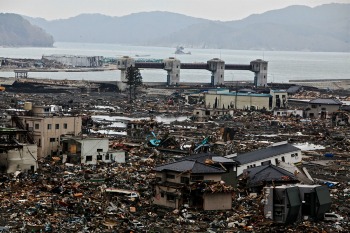
The world experiences far more weather disturbances now than it did in the past. It can be anywhere from hurricanes, tornadoes, floods, earthquakes, volcanic eruptions, and even tsunamis that hit various parts of the world now and then. Irresponsible human activities hastened the arrival of global warming and climate change that in turn messed up natural weather systems and phenomena that steadily gets worse as the years go by. Only then do humans realize how insignificant we are in the face of these natural disasters that already claimed millions of lives since the 1970s.

These days, social media is instrumental in reaching out to people who live in areas struck by disasters, whether man-made or natural. You can mark yourself safe and connect with family, friends, and thoughtful strangers who want to extend help in times of need. And now, Facebook’s new feature aims to help rescuers and relief organizations (public or private) get to affected areas safely and fast. The tech giant compiles aggregate and anonymous data to paint a clearer and bigger picture about a certain disaster. For years, the social platform has served a crucial purpose of connecting people during catastrophes and the new disaster map can do so much more that in return can save countless lives (both the rescuers and the survivors).

In order to help communities during natural disasters, Facebook has launched disaster maps that use data to help organizations see where people are located and determine what they need.

After storms and other disasters hit an area, traditional methods of communication can be knocked offline and it can take longer for aid and resources to reach survivors. These newly launched maps can help response teams put together a more complete picture of where people are located, according to a release from Facebook.

"We saw people coming to Facebook during disasters to share with friends and family, and thought the trends and how people were sharing on the platform could actually help fill that critical information gap that humanitarian organizations were facing," the social network’s public policy manager, Molly Jackman, told Mashable. "That way, they [could have] the information they need to respond more quickly and effectively to natural disasters."

(Via: https://weather.com/safety/news/facebook-disaster-relief-maps-data-recovery)

Maps are helpful in directing everyone on the right course of action when delivering much-needed relief and aid. We can’t stop natural disasters from happening but we can prepare for them although we can’t really tell the extent of the disaster once these disasters eventually strike. It is even more catastrophic in struggling developing nations in Asia and Africa that don’t have existing weather prediction systems in place to warn everyone of a disaster’s approach and what areas will likely be affected, so people can evacuate when necessary.

Maps based on the same concept have been produced from mobile phone company data by analyst FlowMinder. In Nepal, for example, the maps were able to provide clues as to where people dispersed after the 2015 earthquake. However, the sharing and processing of mobile phone data has not approached real time.

According to Molly Jackman, a public policy research manager with Facebook, the new maps have been in development for the past year and are the outcome of extensive discussions with humanitarian organisations. “They helped us identify the data that would be most helpful for them,” said Jackman, speaking to IRIN over the phone from Facebook’s Menlo Park headquarters. “A lot of the conversation started with Safety Check; at first they just asked us to aggregate that data. The challenge we quickly realised is that a lot of people may not be looking at their phones or checking in as safe. So we wanted to dig a layer deeper.”

(Via: https://www.irinnews.org/special-report/2017/06/08/surveillance-good-facebook-tracks-disaster-victims)

The map will allow rescuers identify which areas are safe and which ones are not that can facilitate disaster recovery and in rescuing possible survivors trapped inside the danger zone. The map can also tell whether which direction survivors are evacuating to, to let rescuers know where to concentrate their relief efforts. Facebook has spent a great deal of time developing this disaster map to make sure that whatever data they get will prove useful in times of disasters without compromising the privacy of the people using these maps.

The following blog post Facebook’s Disaster Maps To The Rescue is available on KeatingEconomics.com


source https://www.keatingeconomics.com/facebooks-disaster-maps-to-the-rescue/

Sunday, 17 September 2017

No More Targeted Ads From Gmail

We like to think we are safe in the confines of our personal Gmail account but how mistaken are we. Not only is your browsing habit observed and recorded but Google also sneaks a peak at our emails just so they can show us targeted ads, all for the love of (sponsor’s) money. You really can’t remain anonymous on the web anymore because you leave digital footprints that a tech giant like Google can take advantage of. Sadly, though, you have no choice unless you totally give up modern email and switch back to snail mail that may still inadvertently get lost en route to your receiver and can take a lifetime to get there.

Modern technology has indeed made life easier but there are a lot of catch that not all the time we are aware of. And the fact that Google reads your emails in Gmail is not new anymore because it made the headlines years ago. Targeted-advertising generates the biggest cash inflow for Google even though we aren’t thrilled at the news of them spying in on us. Do you even feel comfortable knowing that other people can read the contents of your personal email account? But then, it’s an efficient and comprehensive free web email service, so can we really complain at all?

Google is making a change to its advertising practices that will affect millions of Gmail users around the globe. Starting later this year, the company will stop reading your emails to refine its ads.

If you're just learning that Gmail scans your messages, this is an issue that dates back for years. Google's automated systems routinely scanned Gmail users' incoming and outgoing emails to help refine the company's massive data-gathering operation, which in turn supported its enormous targeted-advertising business.

Google's ad business is what keeps the entire company chugging along. Last year, 88 percent of all revenue at Alphabet, Google's parent company, came from Google advertising, according to its annual report.

(Via: https://www.washingtonpost.com/news/the-switch/wp/2017/06/26/gmail-will-no-longer-snoop-on-your-emails-for-advertising-purposes/?utm_term=.d51d438f04dc)

But all these things are about to change as Google announced they will cease to read emails anymore as they refine their controversial advertising practices. The new changes will give users more control as to what ads they want to see popping in and out of their browser (not email, please) although the company has not yet specified when these changes will actually take place.

Google said it does not scan the email of paying corporate customers of its G Suite of services, but it made the policy change — announced in a company blog post on Friday — on its free consumer version to eliminate confusion and create one uniform policy toward Gmail.

As it builds its Google Cloud business for selling internet infrastructure and services to corporate customers, Google is trying to ease concerns that it will use data from corporate customers to help its mainstay advertising business.

Google said it plans to carry out the changes to the Gmail ad policy “later this year.” It will continue to scan Gmail to screen for potential spam or phishing attacks as well as offering suggestions for automated replies to email.

(Via: https://www.nytimes.com/2017/06/23/technology/gmail-ads.html)

Google snooping in on emails coming in and out of Gmail isn’t entirely a bad thing as it helps them filter out dangerous spam and malware that can harm your system but that does not erase the fact that they do so without the user’s consent. Meanwhile, they will now streamline ads depending on data you have set on your settings or on your search history on other Google-related services like Youtube. This move may eventually help Google win some of the lawsuits filed against them regarding wiretapping allegations and even win over corporate clients into using their web services and infrastructures.

The following blog article No More Targeted Ads From Gmail See more on: www.keatingeconomics.com


source https://www.keatingeconomics.com/no-more-targeted-ads-from-gmail/

Saturday, 9 September 2017

On Fake News And The Freedom Of The Media

The proliferation of fake news these days is quite disturbing. For the ordinary person, it is hard to discern which news they are reading is genuine and which one is fake because they are all over social media. It’s not common for this news to hit mainstream media but they are a growing pain to social media users especially the millennials who access the web on a daily basis. However, others are making a big issue on a bill that aims to prevent the proliferation of fake news because it might infringe on the right of the freedom of the press, or so they say.

Facebook is the most notorious platform where fake news abounds. It is distressing because of the number of people (several million) visiting this site daily and its impact on people’s behavior over time. It also affects the view of people of what journalism and ethics are all about. People can be misled to believe a certain issue or point of view because they have seen it posted on a popular site like Facebook and more so because it has been liked and shared by thousands of other Facebook users who are as naïve as you. While it is the media’s right to voice out their opinions, it is never right to tell people erroneous information. They should remain objective at all times and tell the news as it is and not makeup stories just to capture the people’s attention.

Fake news and light touch regulation of social media platforms are threats to democracy and press freedom in Ireland, the chair of the Press Council Sean Donlon has warned.

It comes as the Press Ombudsman Peter Feeney cautioned new media organisations that their credibility was being questioned because of the sharing of fake news online.

He said Facebook was aware of such threats to its credibility and warned the public would return to traditional news outlets in search of accurate and trusted information if online content was found to be untrustworthy.

"There are far more checks and balances, where traditional values of good journalism, accuracy, impartiality, depth and context are more likely to be found," said Mr Feeney.

"If the public requires access to accurate information and informed analysis, then there may well be a return to print and broadcasting.

(Via: http://www.independent.ie/business/media/fake-news-a-threat-to-freedom-of-media-35763182.html)

A major challenge these days is to educate the people how to spot fake news on social media. No matter how obvious it may be, many people seem to love the theatrics of fake news and can’t resist sharing it with others. Unfortunately, many update themselves on the latest news from social media – the platform where fakes news are plenty. They end up confused as to what is fact from fiction, making them an easy prey to fake news.

Why did the false tweet get so much more attention? A new study published June 26 in the journal Nature looks into why fake posts like Tucker's can go so viral.

Economists concluded that it comes down to two factors. First, each of us has limited attention. Second, at any given moment, we have access to a lot of information — arguably more than at any previous time in history. Together, that creates a scenario in which facts compete with falsehoods for finite mental space. Often, falsehoods win out.

Diego F. M. Oliveira, the study's lead author and a post-doctoral fellow at Indiana University and Northwestern University, tested this idea by creating a theoretical model for the spread of information. The model was loosely based on epidemiological models that public health researchers use to study the spread of disease. Oliviera's team had bots or "agents" produce messages containing new memes — essentially fake news — on sites like Twitter, Tumblr, and Facebook, and re-share messages created or forwarded by their neighboring bots in a network.

"Quality is not a necessary ingredient for explaining popularity patterns in online social networks," Oliveira wrote in his paper, adding, "Paradoxically, our behavioral mechanisms to cope with information overload may ... increas[e] the spread of misinformation and mak[e] us vulnerable to manipulation."

(Via: http://www.businessinsider.com/why-fake-news-spreads-study-2017-6)

People seem to love the overly dramatic posts. It tickles their fancy and they don’t hesitate to fire away on that like and share button making it viral in a few hours’ time. Most people no longer have the time of day to check facts and simply believe the first thing they read on their news feed. It’s a troubling phenomenon because people form opinions based on what they just read and it can even put people in harm’s way when worst comes to worst.

The people should be more vigilant today and choose the social media channels you follow. Avoid the ones that don’t sound legit to avoid exposure to fake news at all. It does not mean that a certain news item is true if it has been shared on social media countless times already enough to make it go viral. Keep that in mind and you’ll do well even if you are a regular social media user. Even media practitioners shouldn’t just pass the blame and take full accountability for their actions and accept the fact that the times are changing. If they don’t want anyone meddling with their business, don’t make up stories that have no substance at all.

On Fake News And The Freedom Of The Media is courtesy of https://www.keatingeconomics.com


source https://www.keatingeconomics.com/on-fake-news-and-the-freedom-of-the-media/

Saturday, 2 September 2017

Making Money From Pictures

They say do something that you love and you won’t work a single day in your life. If only life is that simple. Societies are more complex now and finding the niche where you belong to is easier said than done. You can only wish to end up doing a job you’d learn to like as you go along. However, as technology continues to progress, changes are likewise taking place and opportunities are opening up to those who are willing to take the risk. Our love for social media and the visual arts proved to be an edge for aspiring photographers who want to make money out of their hobby of taking pictures.

Most photographers often make the transition of taking photography to the next level if only to cover the basic costs of pursuing their hobby. There are various opportunities when it comes to picture taking and you don’t always have to have the latest professional camera (although it helps) but have an eye for what looks good in photos or not. You can offer your services (at a lower cost) to people within your circle (family, friends, colleagues, and neighbors) to take photos during weddings or other special events for starters. You can also dabble with real estate photography or even sell your own photos as stock photographs or to collectors who don’t mind buying works of amateurs like you.

Starting your own photography business is a great way to add a second income or a main income, if you work hard. While the photography market is competitive, many photography business owners have been able to find their niche and build a sustainable career. Like most creative endeavors, you need to balance your passion for photography with real business skills in order to be successful. To build and grow your business, you need both raw talent and a knack for marketing. One photographer we spoke with said an ability "to market yourself" was one of the most important factors in success. You should continually be working to improve your craft and evolving your product, and work consistently on your own branding, online marketing and people skills. Without the two, the results will likely just be an expensive hobby rather than a viable full-time business.

(Via: http://www.businessnewsdaily.com/9506-how-to-start-photography-business.html)

If you want to turn your hobby into a lucrative career, the first investment you have to make is to buy that fancy looking camera with a long list of features that only pros know how to use. And mind you, they can be quite pricey especially high-end lens. You also have to prepare for additional lenses, flashes, memory cards, computers, external hard drives, and a professional-looking website to boot. If you want to make your business more legit, prepare additional requirements in securing a business permit, insurance, business cards, accounting, and contracts. It is quite a handful for a budding photographer like you but they are important requisites to becoming a pro.

In Instagram's early days, few photographers realized the photo-sharing platform’s full potential. Often, it was used as an alternative portfolio or a way to keep your followers up to date on your day to day photo musings. But as Instagram has grown – it announced 500 million users last month – it has become, for some, an opportunity to work on commercial shoots where posting on their own Instagram feeds is part of the deal.

TIME LightBox spoke with five photographers who are leveraging their followings.

Pei Ketron for Pfizer

Few photographers have been seamlessly incorporating Instagram into their business as long as Ketron has. When Instagram-based assignments began emerging around three years ago, Ketron says it was i nitially with travel companies in exchange for lodging and airfare but has grown to bigger budgets as its value as an advertising tool has increased. She cautions photographers that "it’s a big ego boost to have companies approach you, but be weary of accepting the handouts in exchange for money to avoid undercutting the market."

(Via: http://time.com/4364316/how-5-photographers-are-monetizing-their-instagram-followings/)

We now live in a day and age where things have evolved to fit our highly digital lifestyle. Social media is a force to reckon with but it can also be your friend. Photographers who mastered social media are able to leverage their income and make money from the photos they post on social media especially that of travel bloggers who travel the world for a living, so others can experience what it’s like from the photos they post online. Basically, they make money from being popular social media influencers with a cult following and do a lot of sponsored posts because that is where the money is at. It can even pave the way for your transition from an amateur to a pro photographer.

While talent helps a lot, it takes a lot of patience, courage, and skills to shift to professional photography where you can turn your hobby into your main source of bread and butter. Learn about building your brand and reaching out to a wider audience using the technology we have today. Just keep in mind that it won’t always be easy, so be ready to build your name and connections because they can help a lot in your future success.

Making Money From Pictures See more on: www.keatingeconomics.com


source https://www.keatingeconomics.com/making-money-from-pictures/